This 8-stop loop starts at the ferry terminal and walks through downtown Vallejo's waterfront gateway, mural walls, civic history, theater district, and ongoing reinvention after the Mare Island shipyard era.
Water, Navy, and reinvention in one compact downtown loop
Downtown Vallejo makes the most sense when you start at the water. The ferry terminal still serves as the city's front door, bringing riders in from San Francisco and setting up the geography that shaped everything else. Across the strait is Mare Island, the shipyard landscape that drove jobs, storefront traffic, and family life in Vallejo for generations.
This tour follows that relationship block by block. From the waterfront, you move into Georgia Street, then past murals, small businesses, the Vallejo Naval and Historical Museum, the Empress Theatre, and one of downtown's strongest present-day gathering zones before looping back to the promenade. The route is short enough to feel easy, but layered enough to show how Vallejo moved from early civic ambition to Navy dependence to a more arts-and-waterfront-centered downtown identity.
The GPS narration triggers automatically as you approach each stop, so the experience works like a guided walk without demanding screen attention. You can move straight through in about 42 minutes or take longer for coffee, museum time, or a waterfront pause at the end.
Tour Stops
8 narrated stops through downtown
1
Vallejo Ferry Terminal
The route begins at Vallejo's front door, where ferry riders arrive from San Francisco and Mare Island comes into view across the strait.
2
Georgia Street Promenade
The promenade shows how downtown turns waterfront arrival into a walkable civic corridor with room to linger.
3
Downtown Vallejo Murals
Public art walls turn downtown into a living gallery and show how Vallejo uses murals to express neighborhood identity.
4
Marin Street Shops
Sidewalk businesses, casual food spots, and local storefronts reveal the smaller everyday bets behind downtown recovery.
5
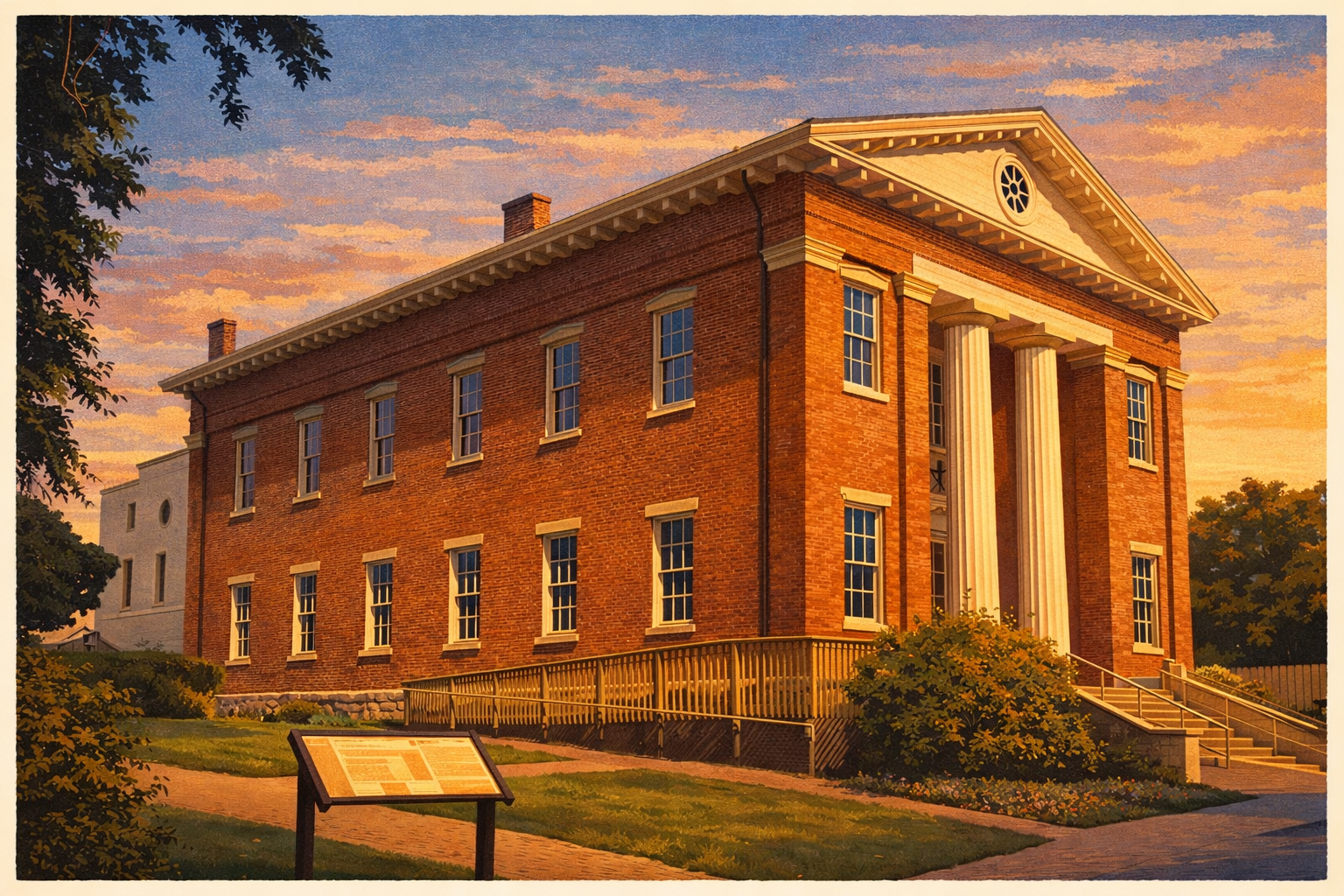
Vallejo Naval and Historical Museum
The museum ties together Mare Island, California state-capital history, and the communities that built Vallejo.
6
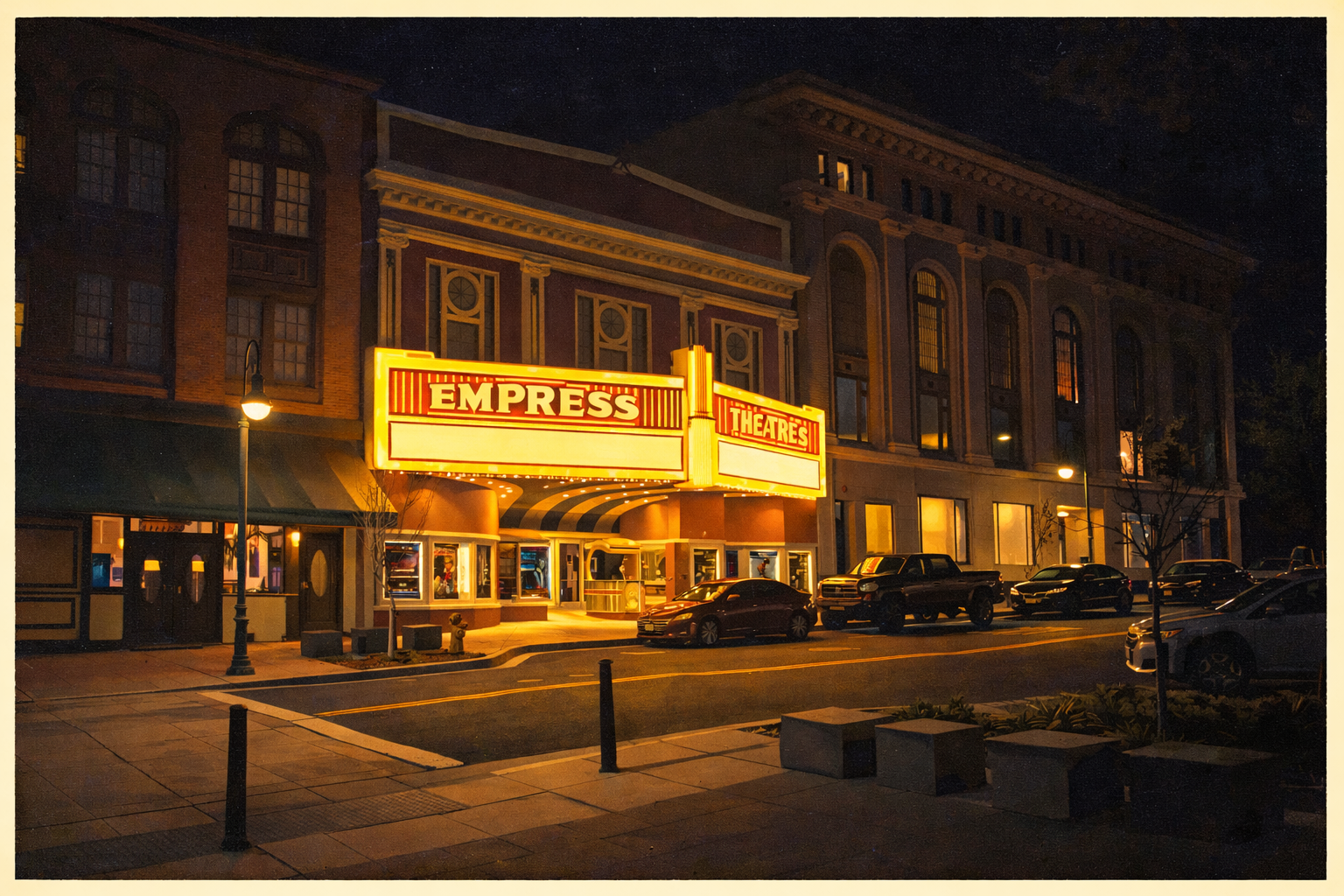
Empress Theatre
The restored 1911 theater carries Vallejo's boom-era confidence into the present as a downtown arts anchor.
7
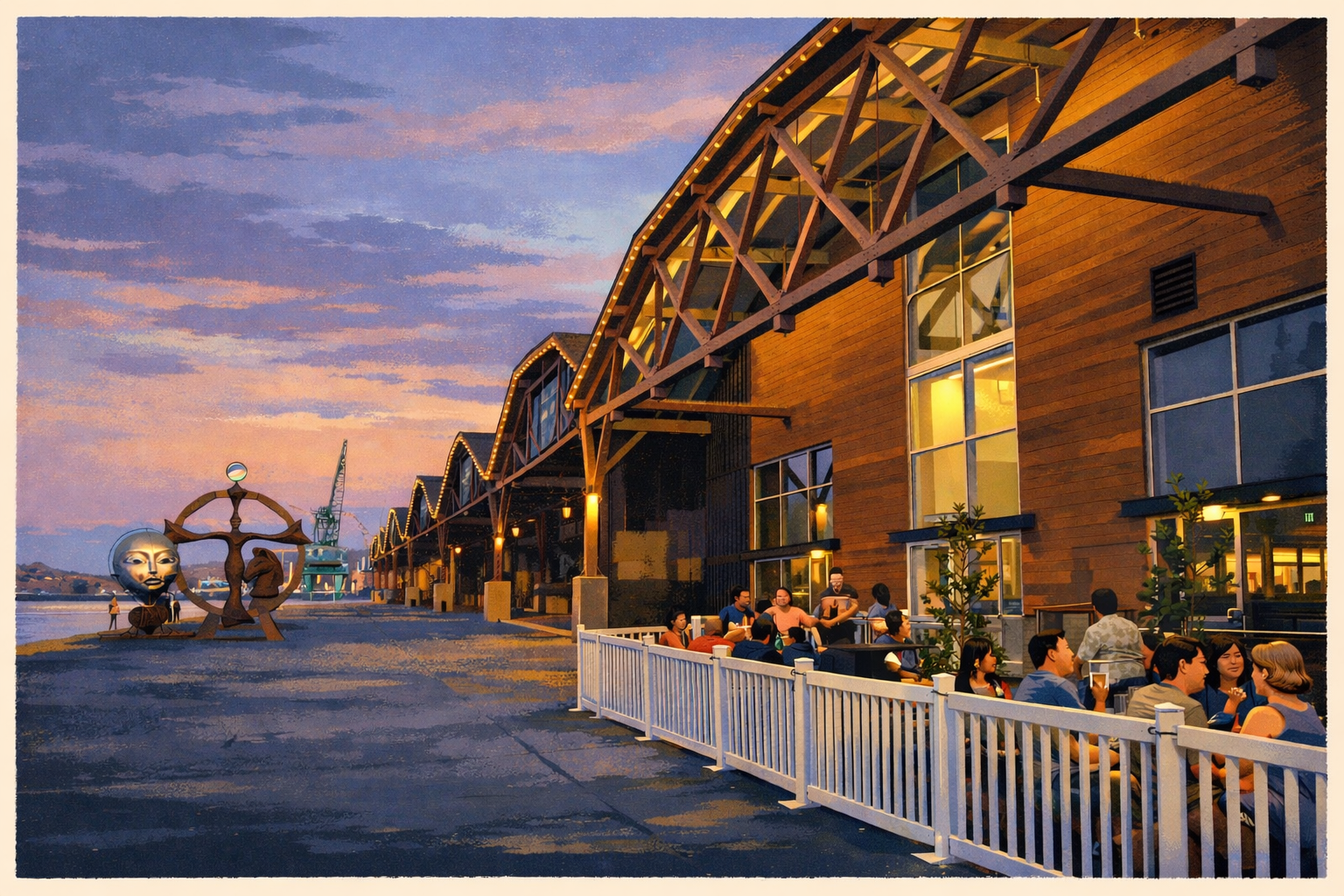
Provisions & Mare Island Brewing
A present-day gathering stop where food, coffee, and brewery energy keep the waterfront active beyond commute hours.
8
Vallejo Waterfront Promenade
The loop closes with a clear view back toward Mare Island, tying together ferries, shoreline geography, and downtown change.
The History
A downtown built by ambition, shipyard gravity, and adaptive reuse
Vallejo was founded in 1851 and briefly served as California's state capital in 1852 and 1853, a reminder that the city was imagined early on as a place of outsized civic importance. That moment was short-lived, but the grid, public buildings, and civic ambition stayed behind.
The longer defining force was Mare Island Naval Shipyard. Beginning in 1854, the shipyard became the first permanent U.S. Navy installation on the Pacific Coast and shaped downtown life for more than a century. Theaters, shops, and restaurants in Vallejo all felt the pull of naval payrolls and shipyard families across the strait.
When the shipyard closed in 1996, Vallejo had to reinvent itself. That process has been uneven, but downtown now shows the outlines of a new identity built around ferry access, arts activity, restored landmarks, adaptive reuse, and a waterfront that still matters to how the city sees itself.
Practical Info
Getting there & starting the walk
The route starts at the Vallejo Ferry Terminal and loops through downtown before returning to the waterfront. That makes it easy for ferry arrivals and just as practical for drivers using the paid lots and garage near the terminal. Most of the walk follows standard city sidewalks with curb ramps, though it is still best to watch for driveway crossings, scooters, and temporary construction.
The tour works well as a 42-minute straight-through walk or a longer 60 to 90 minute outing if you add museum time, coffee, or a meal near the waterfront. Wind can be strong near the promenade, so layers help on cooler days.
FAQ
Frequently asked questions
Is downtown Vallejo safe to walk around?
Downtown Vallejo, particularly around the Empress Theatre, the arts district, and the waterfront, is a lively area with foot traffic, restaurants, and galleries. Like any urban area, use common sense awareness. Daytime and early evening visits are comfortable for most visitors.
Where do I park for the Vallejo walking tour?
The easiest option is to park once near the Vallejo Ferry Terminal, where the route starts and ends. There are paid lots and a garage near the waterfront, and that setup lets you walk the full loop without backtracking for your car.
Can I take the ferry to Vallejo?
Yes. The Vallejo ferry is one of the best ways to arrive because the walking route begins right at the terminal. The ride takes about 60 minutes from San Francisco. Check the Bay Ferry schedule for current times, fares, and service details before you go.
What's the Empress Theatre?
The Empress Theatre is a restored 1911 vaudeville and movie house on Virginia Street. It's now an active music and events venue. Check their calendar — you might catch a show.
Is there food in downtown Vallejo?
Yes — downtown Vallejo has a growing restaurant scene, including several well-regarded spots near the waterfront and along Georgia and Virginia Streets. The brewery scene, in particular, has expanded significantly in recent years, including breweries on nearby Mare Island.
How long does the Vallejo walking tour take?
The narrated loop takes about 42 minutes at a comfortable pace. If you add a museum stop, coffee, or time at the waterfront, planning for 60 to 90 minutes is more realistic.
Can I combine the Vallejo walking tour with the Mare Island driving tour?
Absolutely — they pair perfectly. Walk downtown Vallejo first, then drive across the causeway to Mare Island. Or do it in reverse. Together they make a full half-day outing.