The first U.S. Navy base on the Pacific Coast operated for 142 years. This free GPS-triggered audio tour takes you through the history that shaped a city — from the Civil War to the cold war shutdown.
142 years of U.S. Navy history — one three-mile drive
Mare Island is one of the most historically significant pieces of real estate in California, and most people have never heard of it. Established in 1854 as the first U.S. Navy shipyard on the Pacific Coast, the island spent nearly a century and a half building, repairing, and launching the ships and submarines that shaped American naval power in the Pacific.
During World War II, more than 46,000 people worked here around the clock. Submarines that hunted in the Pacific were built in these dry docks. The base outlasted the Civil War, two World Wars, Korea, and Vietnam — finally closing in 1996 as part of the post-Cold War base realignment. What was left behind is extraordinary: Victorian chapels, a Civil War-era cemetery, machine shops that look frozen in time, and grand officers' quarters with views of the Carquinez Strait.
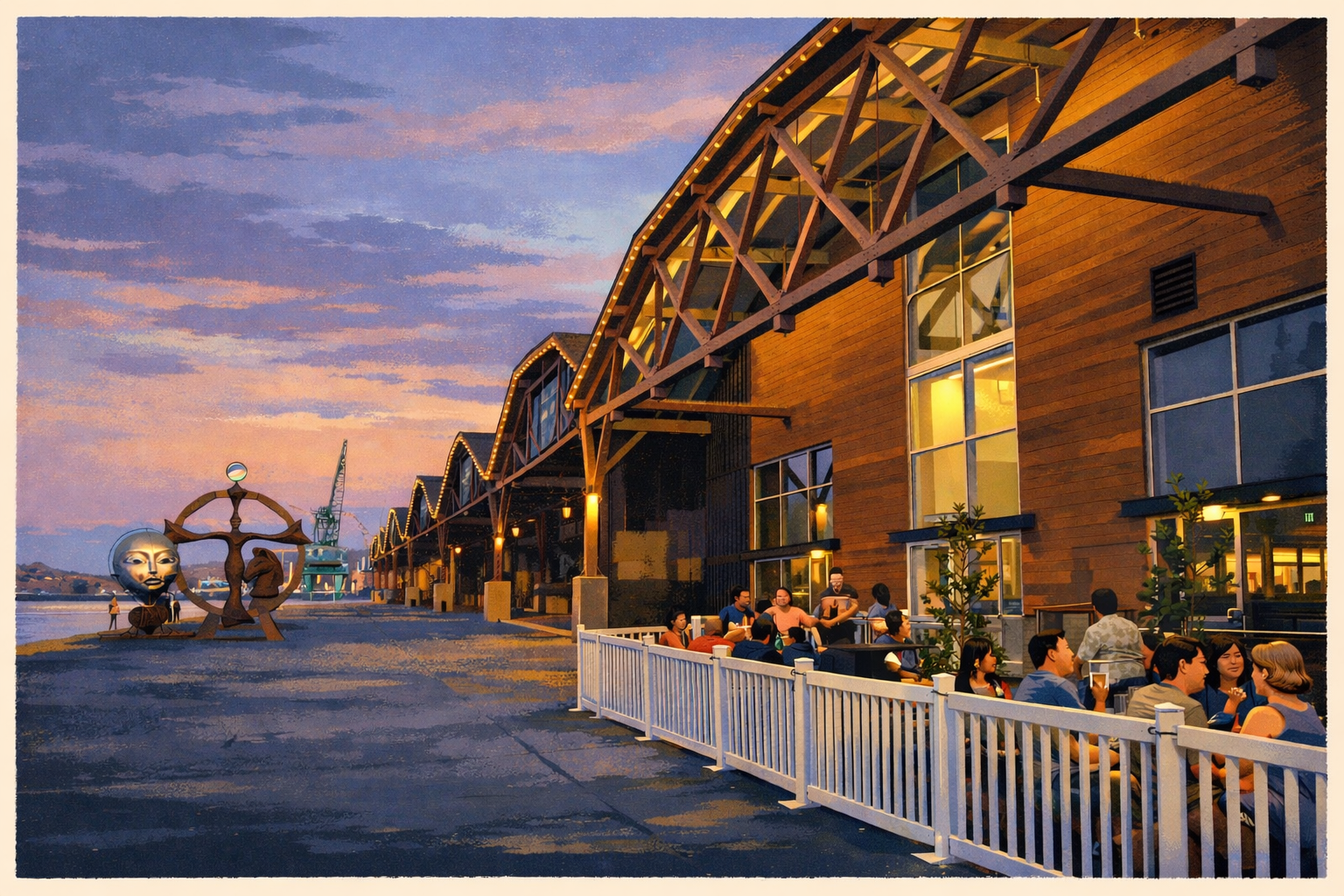
Today, Mare Island is in the middle of a slow, fascinating transformation. Historic buildings have been repurposed into breweries, film studios, makerspaces, and restaurants. Others stand empty and weathered, waiting for what comes next. The contrast between the island's deep history and its uncertain present makes it one of the most compelling places to visit in the Bay Area.
This driving tour connects all of it with GPS-triggered narration — no need to tap the screen or follow a map. Just drive, and the story comes to you.
Tour Stops
8 narrated stops across the island
1
Mare Island Causeway
The sole land connection to the island. The causeway sets the scene — you're crossing onto a place that was federal territory for over a century, closed to the public until 1996.
2
St. Peter's Chapel
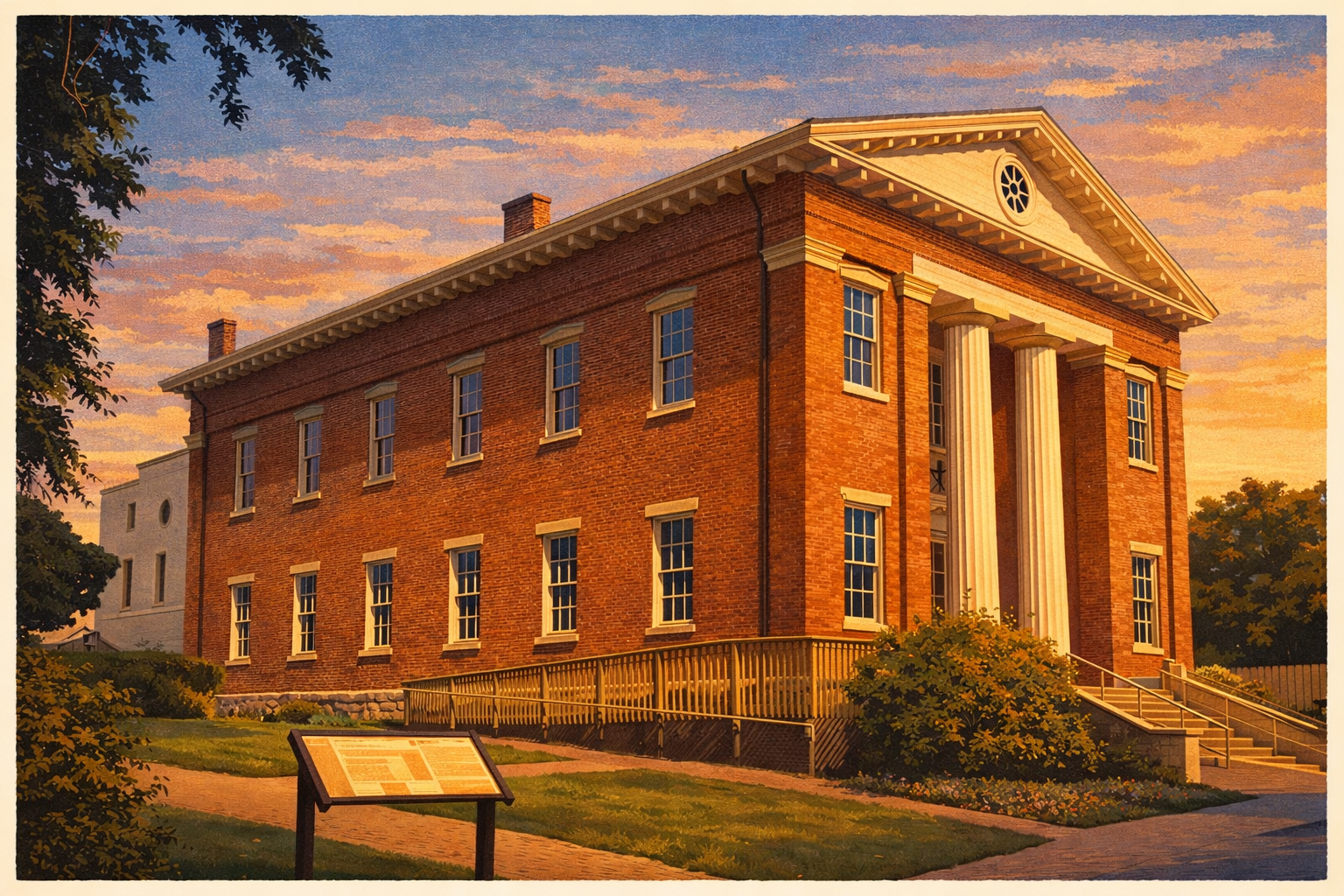
Built in 1901, this Gothic Revival chapel is one of the oldest Navy chapels still standing on the West Coast. The stained glass alone is worth the drive.
3
Mare Island Naval Cemetery
Dating to 1856, this quiet cemetery is the resting place of hundreds of sailors, officers, and their families — including graves from the Civil War era.
4
Historic Dry Docks
Victorian-era dry docks that serviced Navy vessels for over a century. The scale is hard to comprehend until you're standing at the edge of one.
5
The Admiral's Mansion
The commanding officer's Victorian residence — a grand home that speaks to how seriously the Navy took its presence here from the very beginning.
6
Building 46 (Former Machine Shop)
A massive industrial building that once hummed with workers. Now part of the island's creative reuse story — and a striking piece of industrial architecture.
7
Submarine Row
The berths where submarines were built and launched. The Pacific Theater of World War II was shaped by what happened here.
8
Modern Waterfront Redevelopment
Where the island's history meets its future — new housing, restaurants, and businesses occupying what was once strictly military terrain.
The History
From frontier Navy yard to Cold War base
When Commodore David Farragut arrived at Mare Island in 1854 to establish the Pacific Squadron's first permanent shipyard, California had been a state for just four years. The island was remote, barely accessible, and strategically vital — a deep-water anchorage sheltered from the Pacific and positioned near San Francisco Bay's critical chokepoints.
Farragut — who would become famous a decade later for his "Damn the torpedoes" charge at the Battle of Mobile Bay — spent his early years here building the infrastructure that would eventually support a fleet capable of projecting American power across the entire Pacific Ocean. The dry docks he commissioned, the machine shops, the officers' quarters: many still stand.
Mare Island's significance grew through every major American conflict. During the Civil War, ships built here enforced blockades and patrolled rivers. In the Spanish-American War, vessels repaired here headed to the Philippines. World War II brought the island's peak — tens of thousands of workers, around-the-clock shifts, and submarines departing these waters for the most dangerous patrols in naval history.
The base closure in 1996 left a 5,000-acre question mark. Two decades later, the answer is still being written — in breweries and film sets, in crumbling Victorian buildings and newly renovated apartments. The history is still here. You just have to know where to look.
Practical Info
Getting there & what to expect
Mare Island is connected to Vallejo by the Mare Island Causeway (Causeway Boulevard). From Highway 780 or I-80, follow signs toward downtown Vallejo and then to Mare Island. Parking is available throughout the island — there is no entrance fee and no gate to pass through. The island is open to the public.
The driving tour covers about 3 miles and takes approximately 30 minutes of drive time. Most visitors spend an additional 15–30 minutes stopping to walk around certain sites. The route is entirely on paved roads and accessible by any vehicle.
Some areas of the island are under active development or have restricted access — the tour route stays on public roads throughout. Cell service is generally good on the island, but the City Tour app works fully offline once downloaded.
FAQ
Frequently asked questions
Is Mare Island open to the public?
Yes. Mare Island is open to the public. There is no gate, no entrance fee, and no reservation required. Some individual buildings and development zones have restricted access, but the roads and historic sites on the tour route are freely accessible.
Is there parking on Mare Island?
Yes, parking is available throughout the island. You'll find street parking near most stops, and there are several open lots near the historic district. Parking is free.
How long does the Mare Island driving tour take?
The driving tour itself is about 30 minutes. If you stop to walk around St. Peter's Chapel, the cemetery, or the dry docks, plan for 60–90 minutes total. There's no rush — drive at your own pace.
Do I need a data connection during the tour?
No. The City Tour app works entirely offline once downloaded. All audio narration and maps are bundled in the app — no data connection is needed while you're on the island.
Can I visit St. Peter's Chapel inside?
The chapel is occasionally open for special events and tours organized by the Mare Island Historic Park Foundation. Check their schedule for current hours. The exterior is always visible from the road.
Is the Mare Island tour good for families with kids?
Yes — the driving format makes it easy with young children. The dry docks and submarine history tend to fascinate kids, and the cemetery offers a calm, interesting stop. The app requires no interaction while driving.
What's the best time of day to visit?
Morning light is beautiful on the Victorian buildings. Weekdays are quieter than weekends. Avoid visiting at dusk if you want to see all the stops clearly — some areas of the island have minimal lighting.
Is Mare Island the same as the Vallejo waterfront?
Mare Island is a separate island connected to Vallejo by the causeway — it's adjacent to downtown Vallejo but distinct from it. The City Tour app also includes a separate Downtown Vallejo Walking Tour that covers the mainland waterfront and historic downtown.
Are dogs allowed on Mare Island?
Dogs are generally welcome on public roads and outdoor areas of the island. Leash laws apply. Some areas under private development may have restrictions.
Is this tour accessible?
The driving tour is fully accessible — you experience all stops from your vehicle. Visitors who want to walk around specific sites should note that some paths and areas may be uneven. The app itself meets iOS accessibility standards and works with VoiceOver.